Activities for Students
You
cannot teach a man anything, you can only help him to find it
for himself.
-Galileo Galilei
Tour
through these topics to find exciting activities, images, interactive
tools, text, and other resources to let you research our special
star -- the Sun.
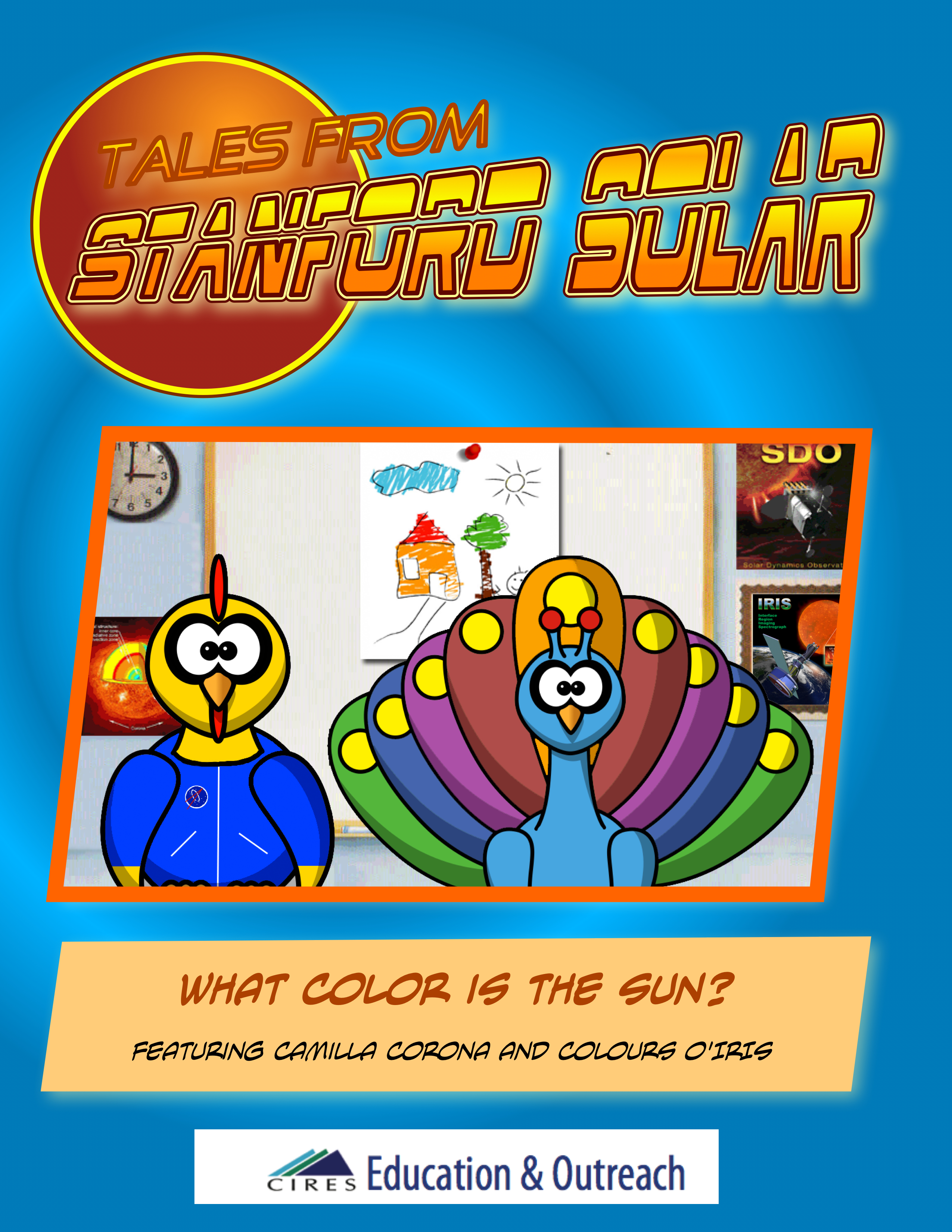 Check out our new comics series!
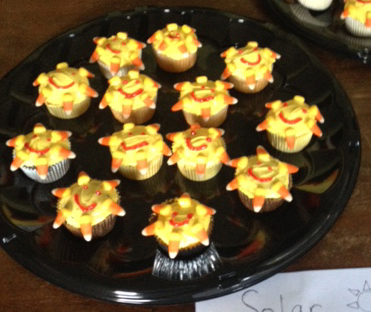 Design Your Own Solar Cupcakes!
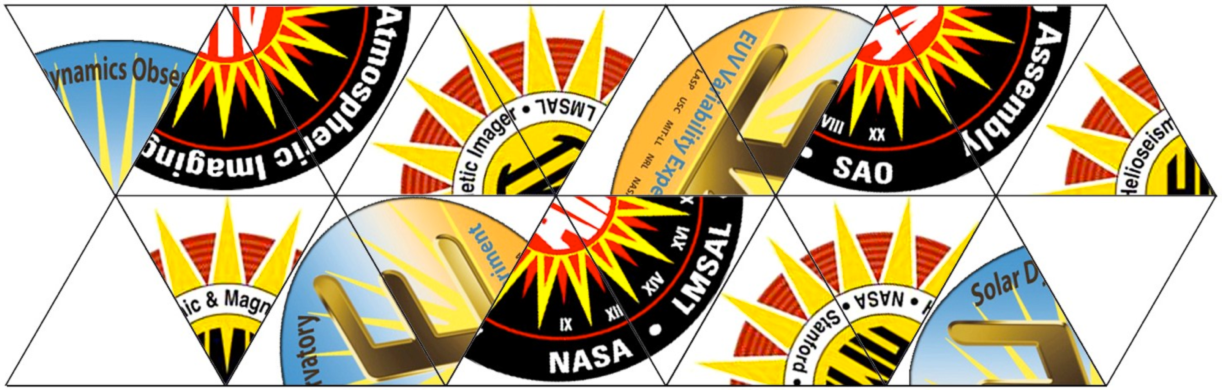 Build an SDO Hexaflexagon!
Activity Categories:
Featured Activities:
|
|
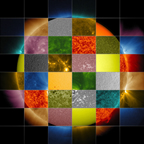
What color is the Sun?
Have you ever wondered what color the Sun is?
Would you like to explore that and related questions using scientific processes? |
 |
Galileo Challenge
Galileo was one of the first and most important observers
of the Sun. Why do you think these observations were important
to Galileo and to the people of his time? Test your knowledge
with our Galileo Quiz!
|
|
|
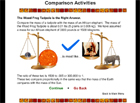
Comparison
Activities
How big, how hot, and how far is the Sun? These activities
are designed to introduce you to the solar scale by comparing
the diameter, the temperature, and the distance to the Sun
to familiar things on Earth. |
|
|
Observing the Sun for Yourself
There are several ways you can observe
the Sun, and hopefully sunspots, for yourself. The easiest
and safest is to project the Sun by building your own pinhole
camera. Or, if you have your own telescope, you will need
to obtain a solar filter. There are even solar telescopes
online, which you can access via the web to observe the Sun.
|
Back
to Top
Videos about the Sun:
 |
Colors and Motions
of the Sun Video
Streaming video "Colors and Motions of the Sun", created
by Professor J. Pasachoff and Williams College, Massachusetts. |
 |
Colors
of the Sun Video
Watch the streaming video of The Colors of the Sun, produced
by the Stanford Solar Center and Lockheed Martin Solar and
Astrophysics Lab. |
Back
to Top
Sunspots:
|
|
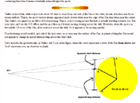
Are
Sunspots Really on the Sun?
When
Galileo Galilei discovered sunspots, he had a problem. In
1612, he had pointed his new version of the Dutch tool called
a "telescope" towards the heavens and found what
appeared to be dark smudges on the Sun. How could this be?
Find out how Galileo proved that they were spots on the
Sun and not undiscovered planets circling the Sun.
|
 |
Sunspot
Races
Place your bets! Can you correctly predict when spots will
disappear or reappear on the Sun? |
 |
The
Spinning Sun
Does
the Sun spin? If so, how fast? Find out by collecting solar
images and then compare your sunspot sketches with those
made by Galileo.
|
Back
to Top
Solar Music:
|
|
The Singing Sun
Have you ever wondered what the Sun would sound like if you could hear it?
Our Sun lies 93,000,000 miles away, surrounded by the vacuum of space.
Sound won't travel through space, of course. But with the right instrument,
scientists can "hear" pulsations from the Sun. |
|
|
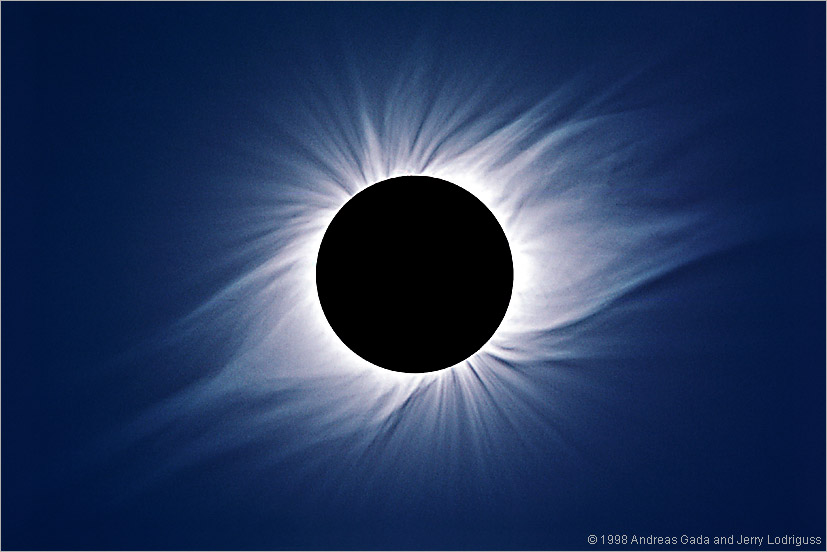
Eclipses and Music
Solar eclipses are rare enough that there is not alot of music on such a specific topic
even though total solar eclipses have always captivated our attention.
However, NASA has put together some playlists that remind us of this inspiring pheonomenon of nature.
|
Back to Top
Solar Images and Data:
|
|
The Solar Dynamics Observory
The Solar Dynamics Observatory (SDO) is the first mission to be launched for NASA's
Living With a Star program, which is designed to understand the causes of solar activity and its impacts on Earth
in the hopes of eventually predicting activity which could be dangerous to the Earth.
The Solar Observatories Group here at Stanford has one of the key instruments on SDO -
the Helioseismic and Magnetic Imager (HMI).
|
|
|
SOHO Solar Images and Data
To discover various characteristics
of the Sun, you'll need to observe it. Your "eyes"
will be the
SOHO spacecraft, currently circling the Sun about
1,000,000 miles from Earth. With SOHO's 12 specialized scientific
instruments, we can explore everything from the Sun's glorious
halo or "corona", to the violent magnetic storms
on its surface, to the sound waves which help us understand
the mysteries of the Sun's deep interior. |
Back to Top
The Electromagnetic Spectrum:
|
|
What
is Ultraviolet Light?
This activity explores ultraviolet
light -- what it is, where it comes from, how we can detect
it, and what effects it has upon us and our Earth. |
|
|
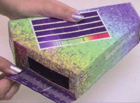
Build
a Spectroscope
The visible spectrum is only a part of
what our sun, a star, emits
within the electromagnetic spectrum. In this activity, you
can build a working spectroscope to study the nature of light. |
|
|
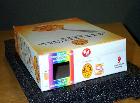
Cereal Box Spectroscope
How to make a very basic spectroscope using a diffraction grating and cereal box.
STEREO Learning Center
|
Back
to Top
Sundials:
|
|
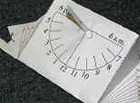
Make
a Simple Sundial
Learn how to make a sundial by using a simple template,
some tape, and a pencil. |
Other
Sundial Links
This page gives a comprehensive list
of links to sundial related pages in the WWW.
|
Back
to Top
Other Activities and Exercises:
|
|
Magnetism
& The Sun
This activity covers the basic principles of
magnetism. Learn how they apply to phenomena on the Sun,
such as sunspots, flares, prominences, and coronal mass
ejections.
|
|
|
Effects
of the Sun on our Planet
In this activity, you can experiment with plants, light,
heat, and water evaporation. Design a simple solar cooker,
a "solar-powered" method to perform a routine task,
or build a parabolic solar collector. |
|
|
Interview
with Mr. Sol
Have you ever wondered what our star thinks about his (or
her?) role up there in the sky? Have you considered what an
awesome responsibility it must be, generating all that heat
and light from fusion and having so many living beings depending
upon you? Sol
really does light up our life. Imagine what he might say if
If the movie frequently hangs with a "Buffering" message, it means the data transfer rate is slow. Try to Pause the movie, wait 20-30 minutes for data to transfer, then un-pause it. Or, try watching at a later time. (Or, possibly your internet connection is too slow).
|
Back
to Top
| |