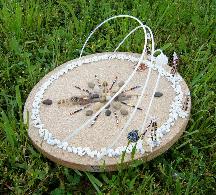
Sun Track Diorama

solar season model
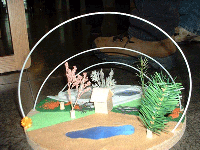
Photo by Ginger Armstrong, Kelseyville, CA

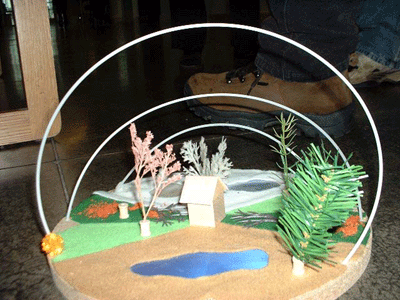
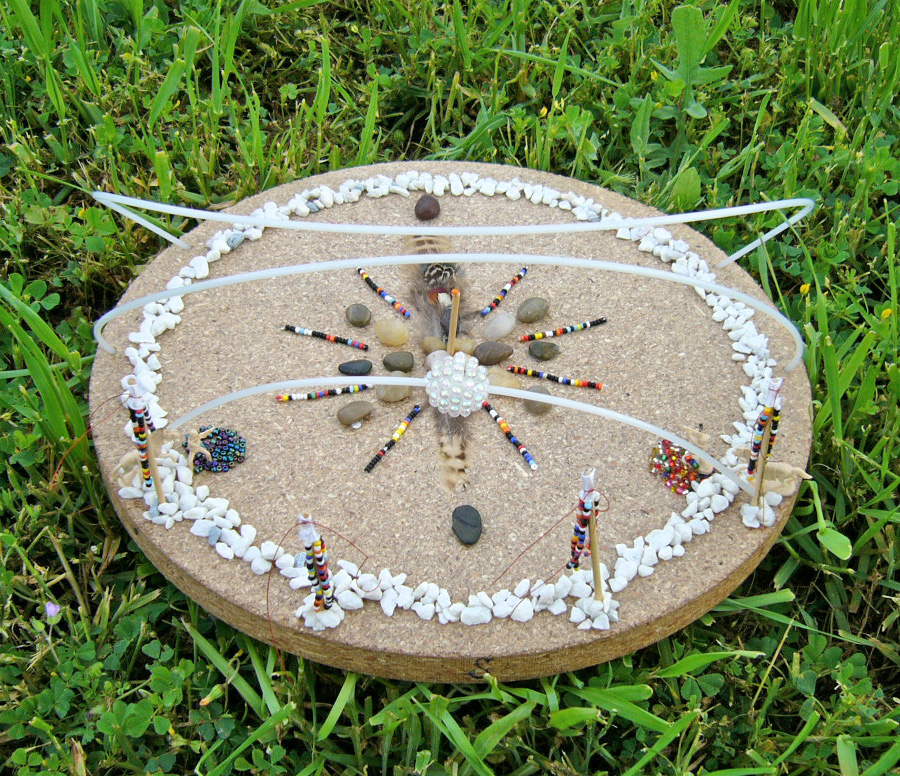
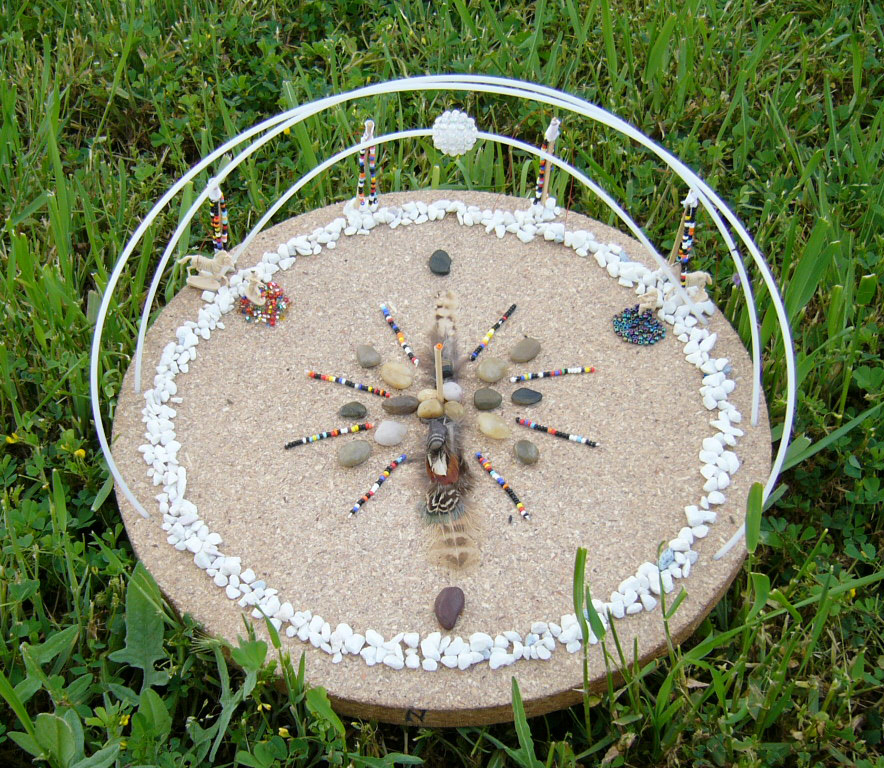
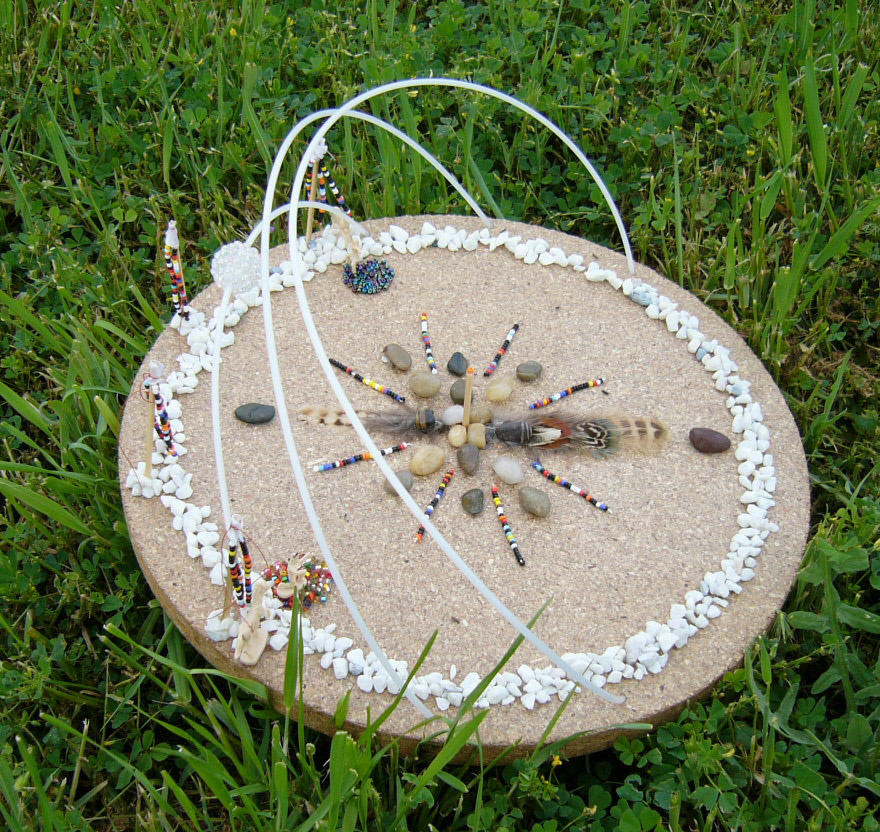
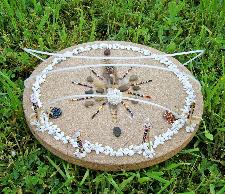
Models of the tracks of the Sun at the equinoxes and solstices, developed by Deborah Scherrer, Barbara Scherrer, and Ginger Armstrong.

solar season model
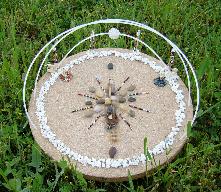
Photo by Ben Buress, Chabot Space and Science Center

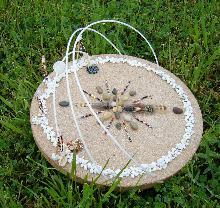
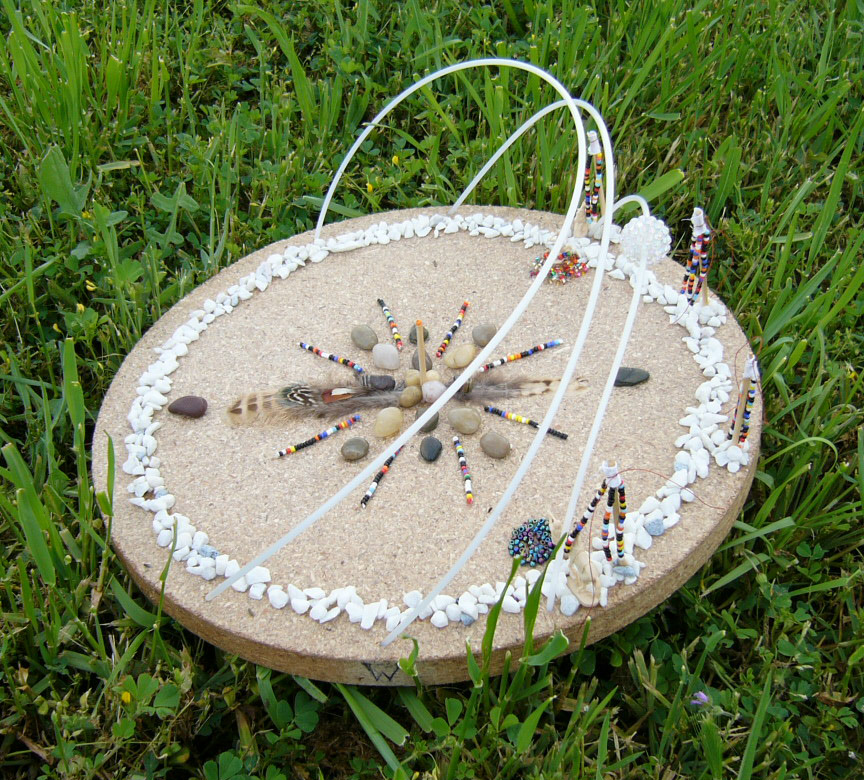
The diorama simulates the tracks across the sky of the Sun at summer solstice (longest track), winter solstice (shortest track), and the spring and fall equinoxes (medium track). A bead simulutes the Sun moving from rising along eastern horizon to setting on wester. The bead can be moved from track to track to explain the solstices and equinoxes.

My program was a guided walk through the park and the topic was the winter solstice. ... I copied a diorama used by Dr. and Mrs. Scherrer during the training that demonstrated the sun's position in the sky at different times of the year. This became my most effective teaching tool. Everyone loved the diorama!" Cidney Webster, National Park Service

Click on each image for larger version.

Instructions

Supplies

  • 12" diameter particleboard disk, 3/4" thick -- purchased (often available precut at places like Home Depot)
  • Plastic cord used in "weedwhacker" machines, to be used as Sun tracks
  • Large bead to use as Sun; needs to fit on the plastic cord
  • Felt for quadrant bases and materials for seasonal decorations -- summer, winter, spring/fall
  • Or, Native American materials for decoration as a Medicine Wheel
  • Tacky(r) or other craft glue
  • Electric drill and bit for drilling holes to insert sun tracks

** Assembly **

1. Mark north, south, east, west directions on the wooden disk.

2. Drill your slanted holes in the base at east, west, northeast, southeast, northwest, southwest as below. The diameter of the holes should be sufficient to hold tightly, but allow removal of, ends of the plastic cord.

6 holes will need to be drilled 1/2" in from the edge. The angle at which they are drilled is important, in fact critical if you expect to be exact. However, even improperly drilled holes will still result in a model which conveys the key concepts.

Drill your holes all the way through the disk. You will be placing your plastic "WeedEater" cord into them. So you'll need to cut the cord long enough to display the solar path as well as fit down into the disk.

At the latitude of San Francisco, roughly 37 degrees, the solstice rise and set points are almost exactly 30 degrees north and south of due east and west. That is, at Summer Solstice the Sun rises at 30 degrees north of due east, and sets 30 degrees north of due west. For Winter, it rises at 30 degrees south of due east and sets 30 degrees south of due west. Mark places on your disk for due east and west, then mark 30 degrees north and south of each of these.

(diagram to be inserted)

You will be drilling the holes where you have placed the marks. However, don't drill yet! The holes will need to lean the right amount. The equinox holes (at due east and west) are the easiest. Simply tip the drill to the south by your latitude (e.g. 37 degrees). Looking at the edge of the board, it looks like this:

(diagram to be inserted)

Other than the latitude adjustment, the cord has no other tilt for the equinoxes. However, your other holes will have an additional tilt. For the solstices, the string should be on a plane parallel to the equinox plane, but displaced to the rise/set points. So, as with the equinoxes, the tip of N-S is also 37 degrees (or your latitude). But it also is tipped in at winter solstice and out at summer by about 20 degrees (9:26/12:00 * 90)

(diagram to be inserted)

3. Cut your cord:

Season/Sun track Hours Sun is up Length of cord above disk Length of cord
Winter solstice 9:36 13.6" 15.6"
Spring/Fall Equinox 12:00 17.3" 19.2"
Summer solstice 14:35 21.0" 23.0 "

Cut the long strip of plastic cord for "summer" solstice solar track. Push, but do not glue, into holes at northeast and northwest. Cut medium length strip of plastic cord for "equinox" solar track. Push, but do not glue, into holes at east and west. Cut the short length strip of plastic cord for "winter" solstice solar track. Push, but do not glue, into holes at southeast and southwest. Thread Sun bead onto one of the tracks. Move to simulate different tracks at equinoxes and solstices.

4. Decorate as a Medicine Wheel, or divide into summer, winter, and spring/fall and decorate accordingly.

©2005 by Stanford SOLAR Center | Permitted Uses | Credits